



The Weekend Showcase for Blockchain-based Finance
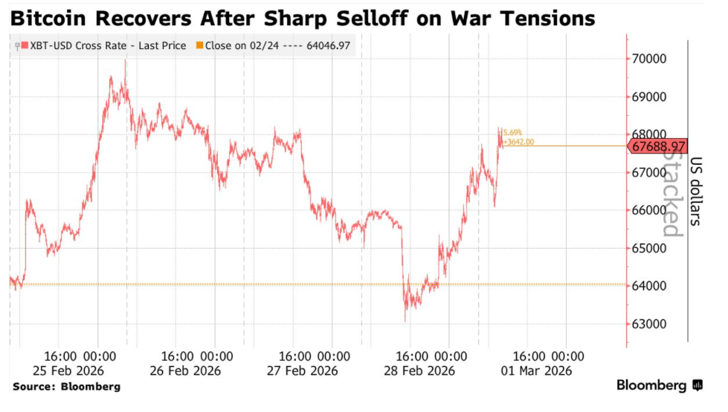
This was an odd weekend. It’s not often that you get a month-end on a Saturday and a global war at the same time. As expected, there was a lot of volatility over the weekend. Well, there was a lot of volatility in crypto at least, as just about every other market was closed.
In most global markets, the month-end in February occurred in the afternoon on Friday, February 27th. While angst was already high regarding a possible U.S./Israel/Iran attack, nothing had actually occurred prior to the month-end closing prices. The first wave of U.S. (and Israeli) strikes on Iran began early Saturday morning, around 1:15 a.m. ET. As a result, any positioning ahead of a possible Iran strike was done at least 9 hours before the strike (when U.S. equity and bond markets closed), and as much as 15 hours before (when European markets closed).
Now, I don’t personally believe the Middle East war will be relevant to global risk asset prices for more than a few days. Sadly, this has happened too many times, and the response is quite predictable now. The typical market response in the first few days is:
… and it doesn’t last. Knee-jerk, algo-driven responses react to fear, but almost all Middle East tensions retrace within a few days, especially when they are as highly telegraphed as this one was. I believe the same could happen again this week, but we’ll see. In 2022, for example, markets bottomed 4 hours after Russia invaded.
That said, even though this is likely to be a knee-jerk, short-term reaction at best, it’s still absurd that most markets are closed during the attacks. Want to hedge a portfolio on Saturday night after a Middle East flashpoint? You’re out of luck in traditional markets. But that’s all changing due to the advent of crypto markets and 24/7 blockchain-enabled markets. One can now reduce risk, reposition, and even arbitrage sentiment across regions in real-time. It’s not just retail either. Institutional players are quietly recognizing that crypto gives them something traditional markets don’t: a way to mark-to-market emotions during the off-hours.
Among the beneficiaries of another Middle East war were the crypto markets: Bitcoin, Hyperliquid, and Polymarket all shone.
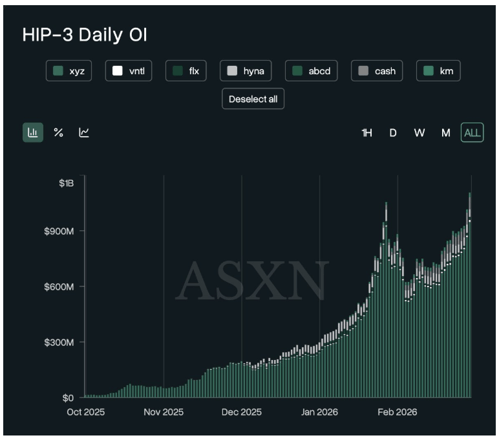
2. Hyperliquid, the largest perpetual futures decentralized exchange, became the go-to place for trading everything after-hours, including gold, oil, and other commodities, while the CME and other futures exchanges were closed. Hyperliquid’s sister company, TradeXYZ (built using HIP-3 on Hyperliquid rails), became the go-to place to trade pre-market U.S. equities. This was one of the largest reported rises in 24/7 tokenized commodity trading ever.
 Source: X/Twitter
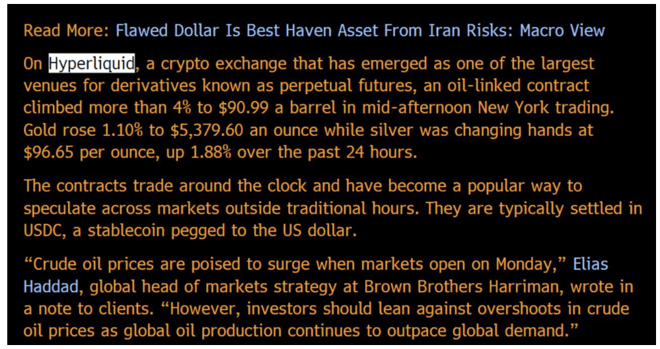
Bloomberg even used Hyperliquid on-chain oil prices as the reference for their Iran risk coverage. Price discovery doesn't wait for Sunday night futures to open anymore.
 Source: Bloomberg
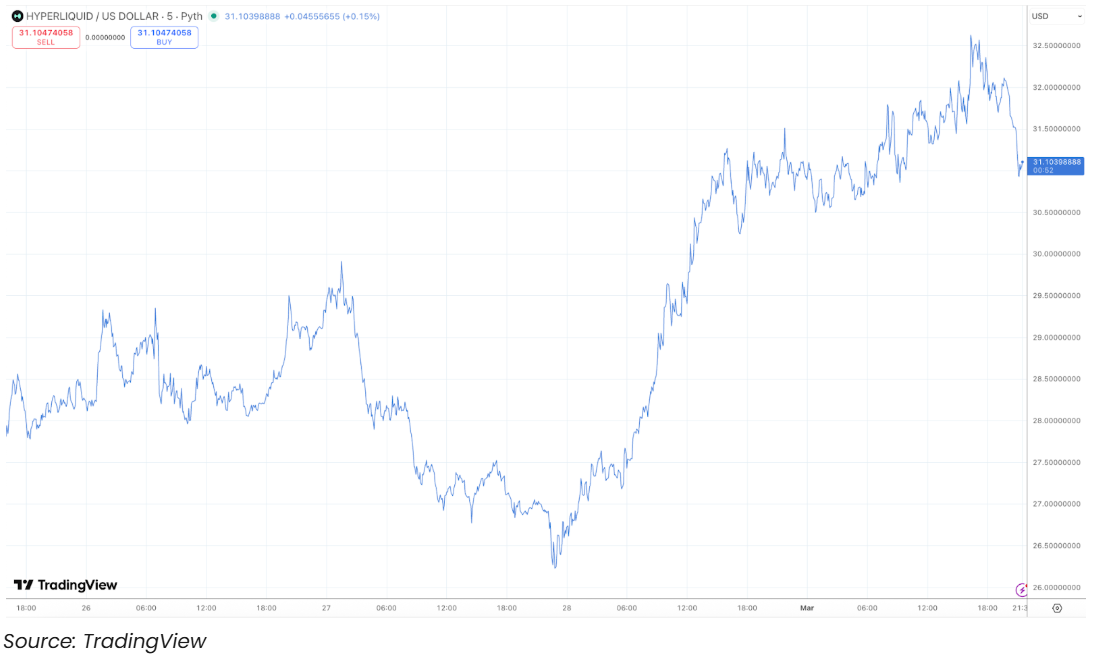
Naturally, the HYPE token was one of the biggest winners over the weekend, rising almost 20%, as Hyperliquid made more in fees than any other blockchain application this weekend.
Finally, Polymarket became the go-to place for trading events related to the war itself. On the day the U.S. and Israel carried out joint strikes on Iran, Polymarket recorded $478 million in notional daily trading volume, with the politics category alone reaching $220 million, both marking all-time highs. Notably, Bubblemaps reported that at least six insider-linked addresses profited approximately $1.2 million from bets related to the conflict.
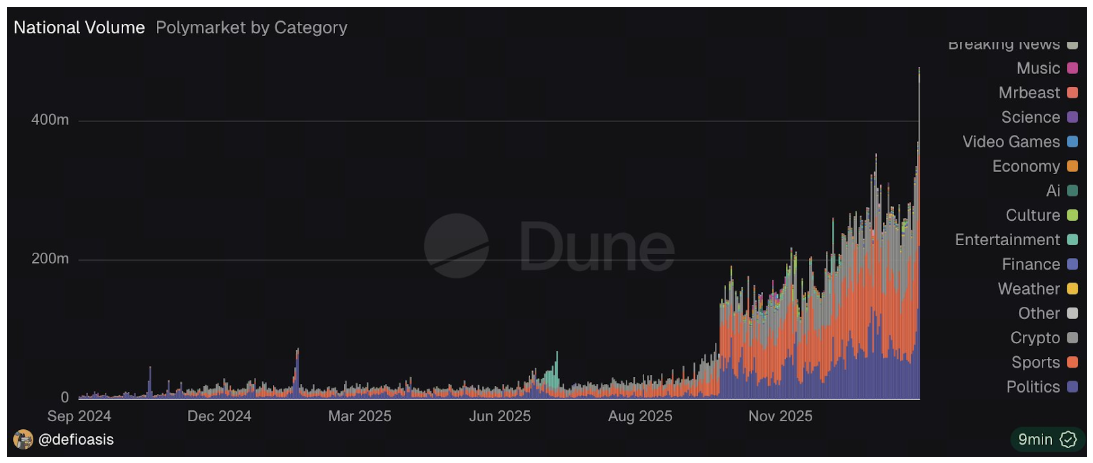 Source: Dune Analytics via @DefiOasis
We’ve previously discussed how silly it is that major markets only trade 5 days per week for a few hours per day. Traditional equity markets operate like it’s still 1973, closing their doors at 4 p.m. ET on Fridays and reopening at 9:30 a.m. on Mondays. That’s 63 hours — two and a half days — where equity investors are locked out, unable to respond, hedge, create alpha, or reposition. It’s like watching a storm roll in and being told you can’t board up your windows for 2.5 days. You can watch and see others across the street preparing, but you have to wait.
This is likely going away, not just because blockchain offers a better real-time trading solution, but because TradFi firms are seeing the fees that Hyperliquid and other DeFi applications are earning at their behest. I still believe that in most cases, taking a break from trading is healthy. Even the worst trading days and weeks eventually end, giving investors a chance to pause and gain clarity without having to trade every tick 24/7 in real time. But having the option to step away is very different from being forced to step away. If something is critical, like a war, you shouldn’t have to wait until 9:30 a.m. ET on Monday to react. By then, any opportunity might already be gone. Technology fully supports 24/7 trading, and the digital assets market has proven to be a testing ground.
In a few days, we’ll likely forget all about the market’s response to the war. But anyone who traded this weekend will not forget crypto’s impact on risk management and trading a major geopolitical event.