



The Meltdown Was Caused by Bitcoin Selling from TradFi
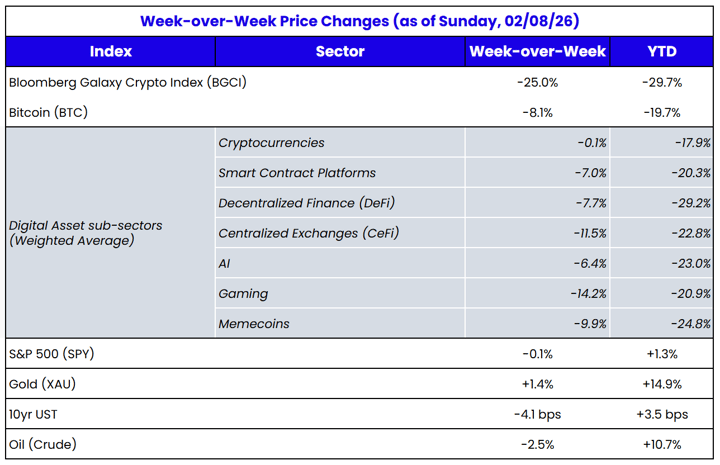
There are many theories about why the majority of digital assets melted down last week. Most are looking for a single seller, either forced to sell aggressively due to margin calls or selling purposefully and manipulatively to drive prices down. I doubt that. First, digital assets weren’t the only assets down last week. Many equities were also down 10-20% on February 5th, including all crypto equities. Second, the constant search for a blow-up is usually a fool’s errand. In the rare cases when this is the cause, this information doesn’t stay a secret for very long. Thus far, all blow-up rumors have originated from individuals who aren’t necessarily plugged in, and I’ve yet to hear anyone credible confirming these rumors. As Alex Kruger pointed out, the mosaic theory approach is more credible. There has been a lot of negative information piling up for the past 3 months, and sometimes all you need is a little wind to blow it all over. This is especially true when the market is built on an asset (BTC) with no valuation technique, and is marketed almost exclusively to fast-money macro/momentum traders who use heavy leverage. That causes lots of volatility.
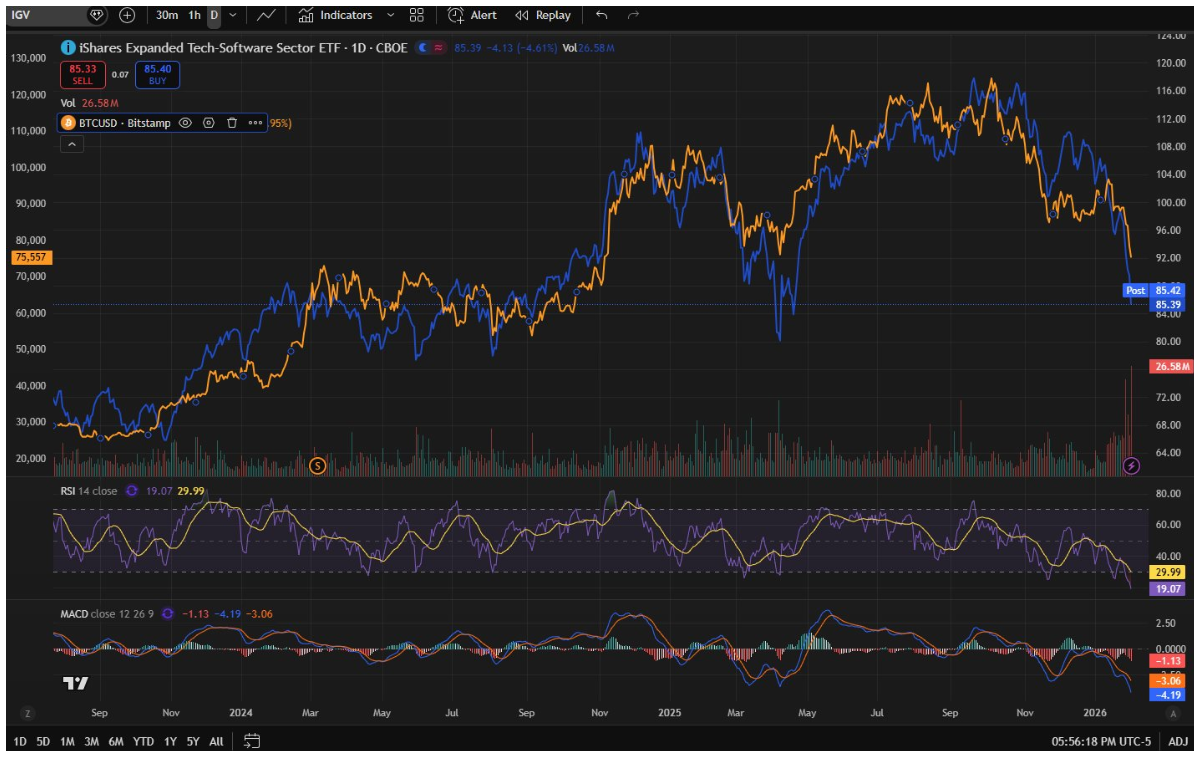
While looking for a single source is likely a dead end, there have been a few analyses that I think get us closer to the truth. Bitcoin drove this selloff, and it is very intertwined with other asset classes due to the proliferation of traders on the CME and via ETFs. I found Jeff Park’s analysis insightful. For those who don't understand option Greeks (or just don’t want to read this), Park argues that many multi-strat (correlation) funds suffered large losses last week and were forced sellers of risk in their books to delever. Many of these funds own Bitcoin versus some other asset (and potentially even versus software stocks since that correlation has increased recently).
Further, the Bitcoin basis trade (long IBIT, short CME futures) is how many large market-making funds (Jane Street, Citadel, etc.) express views in Bitcoin, and that basis blew out, suggesting an unwinding of that trade (forced selling of BTC spot versus short-covering of CME futures). This unwind caused the near-dated basis to jump from 3.3% on 2/5 to a whopping 9% on 2/6.
This is what happens when an asset becomes financialized. On the flip side, regular mom-and-pop retail investors in Bitcoin ETFs actually bought the dip (think boomers, RIAs). So in essence, sticky money bought, fast money sold, but it’s still a black eye on an industry that has already lost a lot of trust due to the carnage from October 10th (amongst other massive selloffs in recent years).
As for the rest of the digital assets space, as usual, Bitcoin’s weight was tough to overcome. Most digital assets fell in sympathy with Bitcoin, as market makers tend to drag down every asset in unison. While this response may seem simplistic, it is the norm until some other assets/sectors begin to diverge. As we wrote about last week, there are some continued bright spots in the market amidst the volatility. Once again, Hyperliquid (HYPE) bucked the trend and acted defensively, rising approximately +8% last week as the rest of the market slumped -15-30%. Sky Protocol (SKY - formerly MKR) and Canton (CC) were only marginally lower last week, also showing defensive characteristics. The silver lining is that market participants may stop crowning Bitcoin and other Layer-1s (L1s) as the “safe trade” and will instead look to see which assets hold up best during downturns. If the media, exchanges, and brokers would help to show off this dispersion and strength, it could lead to further dispersion as investors seek safety.
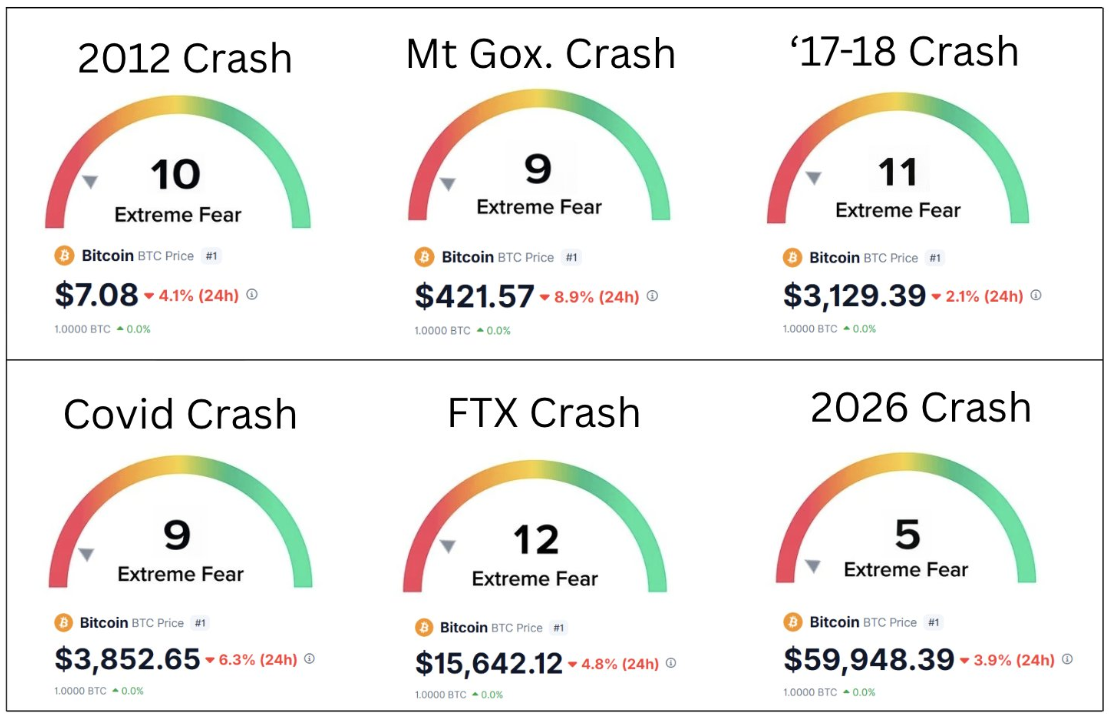
In terms of where we go from here, it’s anyone’s guess. There are reasons to believe that Bitcoin could fall further or snap right back (already up +15% from the lows). But we did start to see the cavalry arrive to support/defend their favorite assets. We saw defensive posts from the usual suspects, including a16z, Dan Tapiero, and Tom Lee. That’s what we saw toward the end of 2019 and 2022 as well. Further, when comparing the current sentiment and fear to other crypto crashes, this one seems a bit ridiculous, relatively.
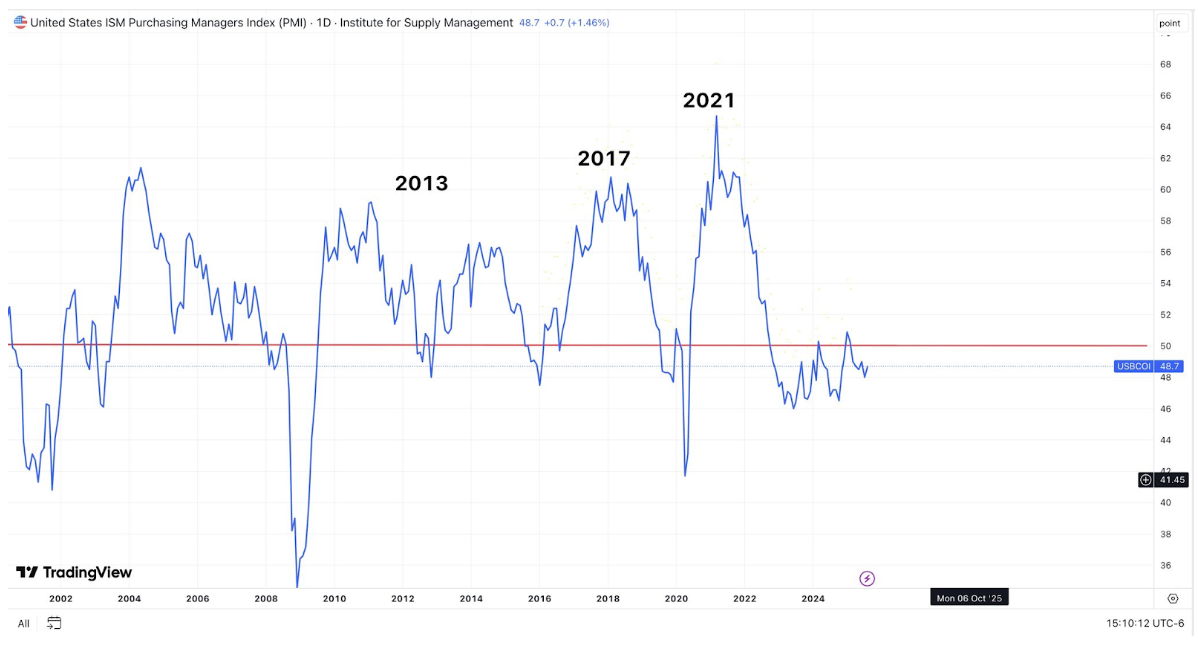
Stepping back even further, there is reason to be optimistic on risk assets in general. The U.S. ISM Manufacturing PMI came in at 52.6 in January, versus the expected 48.5, signaling that the U.S. economy has entered the expansion phase.
Why does this matter?
Historically, every single crypto bull run (2013, 2017, and 2021) has coincided with the ISM moving above 50. And since 2021, the ISM has been below 50 with only tiny short-term bursts above the 50 line. So January's move higher to 52.6 is by far the largest move higher since 2021.
President Trump, Treasury Secretary Scott Bessent, and Federal Reserve Chair nominee Kevin Warsh are telling us exactly how they want to solve the global debt crisis. They want to lower rates, lower the U.S. dollar, run the economy hot, and let the private sector grow the U.S. out of this mess (instead of the public sector). They are creating what could be a Golden Age environment for investing, and nearly every asset class has gotten the message.
Growth is coming. Whether certain areas of crypto follow suit remains to be seen.
How Money is Made From the Growth of Blockchain
If you randomly came across one of my writeups or tweets, you might think I’m just an aggressive person yelling at the crypto service providers to make changes (which, by the way, is working – we’ve seen real positive change at Coinbase, DeFiLlama, CoinGecko, and CoinMarketCap recently, directly related to our complaints and requests).
But if you’ve read every word I’ve written or listened to every word I’ve spoken over the past few years, you’ll notice a very clear pattern to my words beyond just an angry rant. Over the past two years, we’ve not only laid out a blueprint of where this industry is headed, but also how the industry leaders (including Arca) need to change and evolve as Wall Street and Washington take over our once-niche industry. The status quo WILL NOT WORK. You can’t build an industry around a single asset (sorry Bitcoin), you can’t build an industry around a false narrative (that Layer-1 blockchains accrue value from the Fat Protocol Thesis), and you can’t build an industry if every asset is viewed the same (lack of education around the nuances between different token issuers, different sectors, and different asset types).
As we’ve stated many times, there is so much growth happening on blockchain rails, but very little of it accrues value back to existing stocks or tokens. And those that do capture this growth are buried behind mega-cap stocks and tokens with twice the fanfare and half the value accrual.
So, how do you profit from the mass adoption of blockchain as an investor?
This is the most frequent and polarizing internal debate we have. If someone said, “I want to be long blockchain growth,” it’s really hard to point them to an index or a set of assets to capture this growth. All of the growth on blockchain rails is happening in DeFi, stablecoins/payments, and RWA tokenization, but the investment opportunities are slim. For example:
The point is less about the winners and losers above per se and more about reiterating how small this list is and that NONE of the aforementioned blockchain adoption and growth seems to benefit any of the “market-leading majors." BTC, ETH, SOL, XRP, and other majors contribute little to this growth. Moreover, the leading public companies (with liquid stocks) probably don’t benefit much either. Coinbase, Kraken, Gemini, and Bullish will likely face pressure from NYSE, Robinhood, Morgan Stanley, Goldman, JPMorgan, and others. BitGo, Anchorage, and other custodians could see serious competition from BNY and State Street. Circle and Tether, post-GENIUS Act, could see a flood of new stablecoins from FinTech giants and asset managers (which has already begun with PayPal and Fidelity launching their own stablecoins).
Now, many crypto bulls are trying to get you to stop looking at price and instead focus on adoption. I agree that adoption does not equal price, but at some point, adoption has to actually accrue value back to the software. And that’s the biggest question mark.
The good news is that I’ve never been more bullish on crypto. Given recent industry developments, I believe the industry is more de-risked than ever, and the probability of long-term success is higher than it has been in the past. The bad news is that finding anything worth investing in to capture this growth remains a challenge.
While it may be a waiting game for a few more months until the clear winners emerge, the regulators have not slowed down their efforts. The SEC staff recently released guidance on tokenized securities. The SEC divides tokenized securities into two broad categories:
Clarifying these taxonomies is a necessary first step towards ensuring that a diverse group of stakeholders can engage constructively. With the SEC on board, U.S. companies have more confidence to start changing the game (as indicated by Robinhood recently). As governments clarify and companies build, investment opportunities will arise. It’s just unlikely to come from many of today’s most prominent companies and protocols.